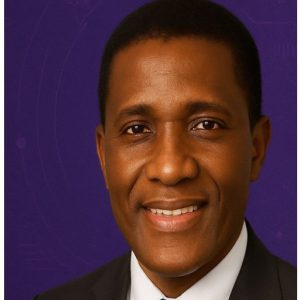
About Ijigban Daniel Oketa

Global Strategist | Reform Architect | Institutional Thinker

A trained development economist and member of the Royal Economic Society- London, Ijigban Daniel Oketa, FREcon is a global systems strategist and institutional reform architect whose work centers on governance transformation, ethical leadership, economic architecture, and long-term nation-building models for emerging economies.

His philosophy is rooted in the following central convictions:

  1. Nations do not rise or fall based on personalities, but on the strength, clarity, and sustainability of their systems.
  2. A country cannot be transformed beyond the mental and moral altitude of its own citizens.
  3. Decline happens when good people withdraw from politics and public leadership. Civilization advances when they re-enter politics and governance with purpose, discipline and vision.
  4. Every human being is capable of both good and evil. What societies need are systems that guarantee justice — and, more importantly, continuously renew the human mind to resist crime and corruption. That is where the metaphysical defense code fits perfectly.
  5. Nothing stands alone or works without unity or partnership of two of more entities. Unity is not only a force; it is the soul of divinity and creativity.

Through his frameworks, policy designs, and institutional initiatives, he advances structural approaches to life, leadership, governance and success —prioritizing principled based systems, time mastery, human capacity optimization, ethical power alignment, and economic resilience.


Intellectual Foundation & Philosophy

At the core of Oketa’s intellectual prowess and philosophy are:

  1. The H-TIPS Framework (Human & Time Innovation Power System) — a universal model designed to establish human safety and elevate human potential against wrong doing or corruption, align leadership, innovation, and governance with long-term structural outcomes. The framework proposes that leadership is not achieved through force or rhetoric, but through disciplined alignment of human capital or consciousness with universal designs.
  • The African Economic School of Thought and Social Dynamism (AESOT) also known as the Oketa-Ijigban Economic School of Thought— a forward-looking philosophy addressing ethical capitalism, innovation ecosystems, and generational wealth architecture in developing societies. His economic thinking emphasizes enterprise-driven development, entrepreneurial state partnerships, and systemized capital formation rather than consumption-based growth.
  • The Doctrine of Regenerative Civilization (DRCC)— which holds that the future of civilization depends on producing humans capable of acting as regenerative citizen-leaders who treat citizenship and leadership as civic duty and prosperity as a stewardship responsibility across generations- to make the earth a better place. The Doctrine is philosophically robust and institutionally deployable through H-TIPS (Human and Time Innovation System).
  • ARISE Nigeria Transformation Project: The Agenda for Reforms and Initiatives for Sustainable Economy (ARISE) Nigeria Transformation Project is a national movement dedicated to building regenerative citizens and transformative leaders capable of renewing Nigeria from within. Grounded in the Doctrine of Regenerative Citizenship Civilization (DRCC), the initiative recognizes that sustainable national development begins with the transformation of the human person—their mindset, values, responsibility, and civic consciousness.
  • Unity of the Faith Mission: promoting interfaith harmony, peacebuilding, humanitarian service, and human capital development through prayer, dialogue, education, collaboration, and community-driven initiatives that strengthen unity and social transformation.

Across all doctrines and framework, a recurring theme persists: leadership must evolve from reactive governance to proactive institutional engineering with a united purpose and mindset renewal against obsolete beliefs and practices.


Institutional Architecture & Reform Initiatives

Ijigban Daniel Oketa is the founder and strategic driver behind multiple ecosystem-level initiatives aimed at reshaping civic and economic landscapes.

He leads the development of the Scale Valley Entrepreneurship Ecosystem (Abuja-Oasis), and Benue State Startup Innovation Center- a long-term structural vision to position Nigeria as a globally competitive innovation and enterprise hub.

He has advanced legislative and ecosystem reform models to strengthen startup governance, entrepreneurship funding pipelines, and institutional infrastructure across subnational regions.

Through the Citizen Voices Empowerment Foundation (CVEF), he promotes civic responsibility, youth leadership development, intercultural dialogue, and structural empowerment initiatives designed to align governance with citizen-driven accountability.

His broader institutional vision includes the establishment of hybrid civic and enterprise centers capable of evolving into billion-dollar innovation infrastructures over multi-decade horizons.


Strategic Focus Areas

Oketa’s advisory and intellectual work spans:

  • Governance System Reform
  • Economic & Entrepreneurship Ecosystem Architecture
  • Ethical Leadership Doctrine
  • Institutional Longevity Design
  • Innovation & AI Governance Policy
  • Strategic Civic Empowerment
  • Personal Growth and Development
  • Metaphysical Defense and Intelligence
  • Spiritual Awakening and Unity of the Faith

He advocates for a transition from personality-driven politics to structure-driven statecraft, emphasizing that emerging nations must institutionalize wisdom, discipline capital, and embed accountability into policy architecture if they are to compete globally.


Global Outlook

While rooted in Africa’s transformation journey, Oketa’s frameworks are designed for global application. His thinking engages with themes central to the future of capitalism, the ethics of power, sustainable development, intergenerational wealth systems, and the re-engineering of governance models for the 21st century.

He contributes to global policy discourse through research submissions, economic position papers, leadership essays, and structural reform proposals aimed at shaping long-term strategic conversations beyond electoral cycles.

His work is guided by two core principles:

“Leadership without universal principles breeds chaos.
Time without mastery leads to waste.”

“Though life may be complex: wisdom dwells in simplicity.”

Everything requires a system or structure to live or thrive.